Guides
Compress PDF for email attachments
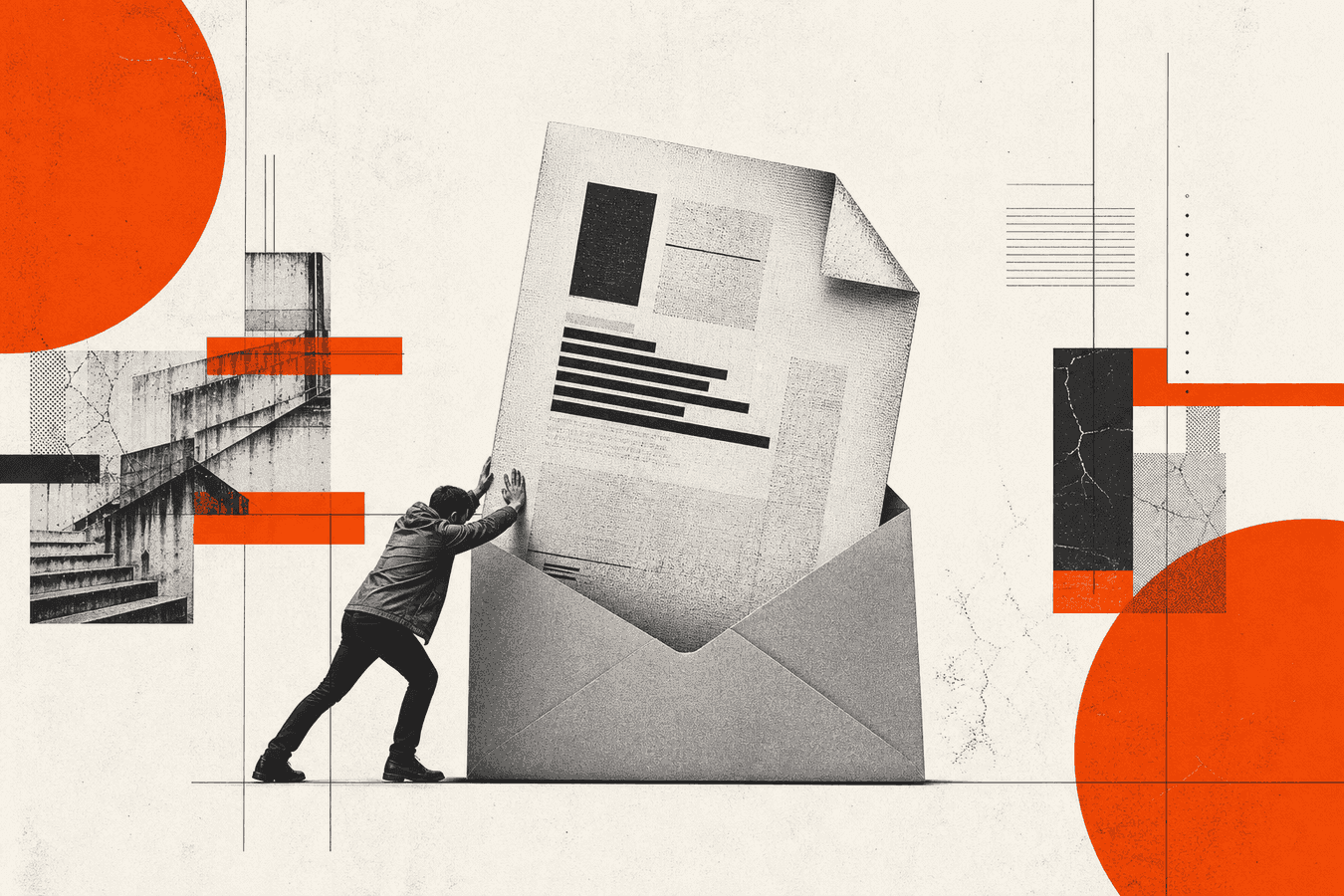
Email providers cap attachment size. Gmail and Yahoo Mail stop around 25 MB per message. Outlook often lands near 20–25 MB, and corporate inboxes may cut that to 10 MB. A single scan-heavy PDF can blow past the limit before you add a cover letter or a second file. Shrink the PDF with a lighter preset, check that text and photos still read fine on a laptop, and attach the smaller copy. Toolsy Compress PDF offers screen, ebook, and printer quality levels. Free accounts get 5 PDF operations per day, up to 25 MB per file. Pro removes the daily cap. If the message still bounces, split out pages, delete blanks, or send a cloud link for the full file.
Why email blocks large PDF attachments
You hit Send and the client stalls, or the server returns a size error. The PDF opened fine on your screen. Mail systems measure bytes, not how important the contract is.
Attachment limits exist because servers store and forward whole messages. A 30 MB thread with two report PDFs taxes routing, mobile downloads, and archive quotas. Providers publish caps so senders know the ceiling before the SMTP handshake fails.
Limits also differ by path. You might attach directly in Gmail’s web UI, paste into Outlook desktop, or route through a company Exchange server. Each hop can enforce a lower cap than the marketing page quotes. When in doubt, aim for a few megabytes per PDF unless the recipient confirmed a higher allowance.
Gmail, Outlook, and typical caps
Gmail’s help docs cite about 25 MB for attachments in a single message. Above that, Gmail pushes you toward Google Drive links instead of inline files. That number is a useful planning target even when you use another provider.
Outlook and Microsoft 365 commonly cite 20–25 MB depending on account type and admin settings. Hosted Exchange tenants sometimes set 10 MB for inbound mail. If your message reaches coworkers but bounces to an external client, the external server may be the stricter gate.
Yahoo Mail aligns with the same ballpark near 25 MB. iCloud Mail and smaller hosts vary. Search “email attachment size limit” when you switch providers; treat published numbers as a starting point and compress harder when the first send fails.
Corporate inboxes and form portals
HR portals, government forms, and vendor onboarding sites often cap uploads at 5 MB, 2 MB, or even 500 KB. Those limits sit below what Gmail allows, so a PDF that sends to your personal inbox may still fail on a job application page.
Corporate DLP scanners may queue large attachments longer or strip certain file types. Smaller PDFs pass faster and reduce false positives. Ask the recipient’s IT contact for the inbound limit when mail keeps returning undeliverable.
When a portal quotes a hard megabyte target, compress toward that number and verify in your file manager before you upload. Email and web forms measure the same bytes; only the ceiling changes.
What makes a PDF balloon before you hit Send
File size comes from embedded images, font subsets, metadata, and page count. A text-only export from Word might sit under a megabyte. A phone scan saved as PDF can reach 15 MB in a few pages.
Scanned pages store each sheet as a full-resolution image. A 300 DPI color scan of one letter-size page can add several megabytes. Stack ten pages and you are already near a strict corporate cap without any “extra” content.
Exported slides and design PDFs carry high-res photos, transparency, and embedded fonts. Charts and maps add vector data that grows with detail. None of that shows up in a quick scroll, but the attachment meter reads every byte.
Scanned pages and embedded photos
Phone scanner apps default to photo-quality JPEG inside the PDF wrapper. Receipts, signed forms, and homework scans inherit that weight. Each page is essentially a camera photo, even when the content is black text on white paper.
Photo-heavy reports behave the same way. Annual reviews with headshots, product catalogs, and real-estate listings embed large images at print resolution. Email readers rarely need 300 DPI; they need readable text at laptop width.
If your PDF is mostly photos, start with the screen preset on Compress PDF. Open the result at 100% zoom on a text block and a face or product shot. Soft photos mean you went too far; bump to ebook or shrink page images at scan time instead.
Fonts, layers, and pages you do not need
Some PDFs embed entire font families for a handful of words. CAD exports and Illustrator saves carry layers and clip paths you never see in a mail preview. Duplicate pages from a bad merge also add dead weight.
Run Edit PDF pages to delete blank sheets, upside-down phone scans, or appendix pages the recipient does not need. Fewer pages means fewer embedded images, even before compression.
Re-export from the source when you still have the Word file or slide deck. A fresh PDF export often beats compressing a file that was printed to PDF twice. Keep the heavy master on disk; send a copy tuned for transit.
Quality tradeoffs when you shrink a PDF for email
“Reduce PDF file size without losing quality” is a fair search. Lossy compression always discards something. Your job is to discard what the recipient will not notice in a mail preview pane.
Aim for a file that opens crisply at 100% zoom in a browser tab, not a pixel-perfect archive for print. Email is a delivery channel, not a document vault. Keep the master in your records folder or cloud library. Send a copy tuned for transit.
Drop preset strength in steps. Try ebook first on mixed content, then screen if you still need bytes. Blurry body text or unreadable footnotes mean you went too far. Step up one preset level and, if needed, remove pages instead of crushing images further.
Screen, ebook, and printer presets
Screen targets the smallest file. Use it when the PDF is mostly photos or slides and the recipient will read on a phone or laptop. Fine print in footnotes may soften; check a dense paragraph before you attach.
Ebook balances size and clarity for mixed text and images. Start here for homework packets, short contracts, and internal reports. Many scan-heavy files land under 5 MB at ebook while body text stays sharp.
Printer keeps more image detail when someone may print the attachment, but the file stays larger. Pick printer when signatures, stamps, or fine lines must survive on paper. If the send still fails, compress again at ebook for email delivery and share a printer-quality copy via cloud link.
Text PDFs versus scan-heavy PDFs
Text exported from Word or Google Docs compresses well because the body is vector text, not photos. A light pass at ebook often cuts embedded font bloat without touching readability.
Scan-heavy PDFs depend on image quality inside each page. Compression re-encodes those images. Text edges can look gray or fuzzy when you push screen too hard on a 300 DPI scan. Rescan at 150 DPI grayscale for forms, then compress once.
Avoid re-compressing the same PDF five times. Each pass adds artifacts. Work from the original export or scan, compress once, attach that output.
Prepare the file before you compress
Compression works better when you feed it a sensible source. Fix page count and export settings first, then pick a preset.
Rename exports so you do not overwrite masters. A folder called email-out with dated filenames stops accidental resends of the wrong version.
Check orientation and page order. Some tools bake rotation into pixels; others rely on viewer settings. Open the PDF once locally before attaching.
Delete blank pages and duplicates
Blank pages from double-sided scans or bad exports add weight for no benefit. Edit PDF pages lets you remove page numbers like 2,4-6 or rotate sideways sheets before you compress.
If you merged two PDFs and kept overlapping cover pages, delete the duplicate. One clean title page beats two identical ones at full scan resolution.
When only part of a long file matters, Split PDF pulls out the range you need. A three-page excerpt often emails easier than a forty-page archive with a note saying “see page 12.”
Export or scan at sensible settings
From Word or Google Docs, use “Save as PDF” or “Download as PDF” rather than printing to PDF through an old driver. Driver-based PDFs sometimes embed huge bitmap previews of each page.
For phone scans, pick document mode, grayscale for text forms, and 150–200 DPI unless the recipient needs photo evidence. Color at 300 DPI belongs in your archive copy, not the email attachment.
If the PDF mixes photos and text, see Compress images before email attachments when the bloat is standalone JPGs you plan to merge later. Fix images first, then build or compress the PDF.
Walkthrough: compress with Toolsy
Open Compress PDF in your browser. Upload the PDF you plan to attach. The page accepts one file up to 25 MB per run on free accounts.
Pick a preset. Choose ebook for a first pass on mixed reports and homework scans. Switch to screen if the download still exceeds your target. Choose printer when someone may print signatures or fine lines.
Download the result. Compare file size in your OS file inspector. Open the PDF at 100% zoom on a text paragraph and on any photo page. If banding or blur appears, re-run at a lighter preset or remove pages first.
Free accounts get 5 PDF operations per day. Pro removes the daily cap. Processing runs on the server briefly; uploads are used only for the job and not kept after you download. Read What happens to files after processing if retention rules matter for client work.
Check the attachment before you send
File size alone does not guarantee delivery. You still verify appearance and format.
Right-click the compressed file and note megabytes. On macOS, Get Info shows size; on Windows, Properties does the same. Stay under your provider’s cap with room for other attachments and the message body.
Open the PDF in your default viewer. Scroll every page, not just the first. Zoom to 100% on small type, stamps, and chart labels. If anything looks soft, re-export at a higher preset or split the send.
Send a test to yourself first when the stake is high (job application, insurance claim, signed contract). Mobile mail apps sometimes handle attachments differently than desktop clients. A test message shows you what the recipient’s phone will fetch.
If your company uses DLP scanning, very large PDFs may queue longer. Smaller files pass faster. That is another reason to compress even when you are under the published cap.
Related jobs when compression is not enough
Sometimes the cap is 5 MB total for the whole packet, or the recipient’s server rejects anything over 2 MB. Compression hits a floor where quality collapses.
Try splitting next. Split PDF sends only the pages the recipient asked for. A range like 1-3 often fits when the full forty-page file does not.
Split the send across two messages. Attach the summary PDF now and the appendix in a follow-up. Ask if a shared drive link is acceptable before you assume.
When to split instead of compress again
Long manuals, tax packets, and board decks may need every page at readable quality. Running screen twice on the same file can turn footnotes into gray mush without saving enough bytes.
Pull out the section the reader needs today. Keep the full file in cloud storage with a password if required. State in the email body which pages you attached and where the complete PDF lives.
Merge PDF still helps when you compressed several small files and want one attachment. Merge after each piece is already light, not before.
Cloud link versus attachment
Gmail offers Drive links above 25 MB. Outlook and corporate tenants often prefer OneDrive or SharePoint. A cloud link carries the full-quality PDF; the attachment carries the copy tuned for quick reading.
Name files clearly (Smith-Contract-SIGNED-compressed.pdf). Say in the first sentence whether the attachment is the full document or a preview. Mobile readers tap the wrong link when subject lines and filenames disagree.
For trust before you upload anywhere, read Is it safe to upload documents online?.
Privacy, limits, and when not to compress online
Email attachments keep the bytes you upload. Inbox delivery does not redact account numbers or signatures for you. Treat every send copy as visible to mail admins and archiving systems on both sides.
Toolsy uses uploads only to produce the compressed PDF, then drops them after the response. That fits everyday work packets and school forms. It may not fit regulated health, legal, or export-controlled material without written policy approval.
Free accounts get 5 PDF operations per day, up to 25 MB per file. Pro removes the daily cap. Files above 25 MB need splitting, rescanning at lower DPI, or desktop software on a managed machine.
When confidentiality is absolute, use offline tools on a company laptop. When policy allows cloud processing for routine PDFs, compress the share copy and keep the master offline.
Frequently asked questions
What is the email attachment size limit for Gmail?
Gmail documents an attachment limit around 25 MB per message. If your files exceed that, Gmail steers you toward Google Drive links. Real-world delivery can fail earlier when the recipient’s server enforces a lower cap. Compress each PDF to a few megabytes when you attach several files in one thread. Test with a message to yourself if a client inbox bounced your last send.
What is the Outlook attachment size limit?
Outlook and Microsoft 365 commonly allow roughly 20–25 MB per message for consumer and business accounts, but Exchange administrators can set 10 MB or custom values. A PDF that sends fine to a Gmail address may bounce on a locked-down corporate host. Compress the file and ask the recipient’s IT contact for the limit when mail keeps returning undeliverable.
How do I compress a PDF for email without losing quality?
Work from the original export or scan, delete pages you do not need, then run one pass at ebook on Compress PDF. Open the result at full zoom on body text and any photo page before attaching. If you see fuzzy letters, step up to printer or rescan text forms at lower DPI instead of compressing the same file repeatedly.
Why is my PDF too large for email?
Scan-heavy PDFs store each page as a high-resolution image. Slides, catalogs, and phone scans can reach tens of megabytes in a handful of pages. Embedded fonts and duplicate pages from bad exports add weight too. Compress with a lighter preset, remove blank pages, or split out only the section the recipient needs.
How do I compress a PDF to 1 MB or 5 MB for a portal?
Start at screen, check readability, then remove pages or rescans if you are still over the cap. Strict job and government portals sometimes require 1 MB or less for the whole file. That may need grayscale scans at 150 DPI plus aggressive compression. Email workflows rarely need targets that small, but the same preset steps apply.
Can I compress a PDF for email free online?
Yes. Toolsy Compress PDF is free for up to 5 PDF jobs per day, with each file up to 25 MB. Pro removes the daily cap. Pick screen, ebook, or printer quality, download the smaller file, and attach it. Read the retention notes on What happens to files after processing before you upload sensitive material.
Does compressing a PDF make text hard to read?
Text in vector-based PDFs usually stays sharp because compression targets embedded images and font subsets more than the letterforms themselves. Heavy screen compression on scan-only PDFs can blur text because the page is one big image. Check a dense paragraph at 100% zoom; if letters look gray, use ebook or rescan at lower DPI.
Should I compress PDF or compress images before emailing?
Compress standalone photos with an image tool when they are not inside a PDF yet. See Compress images before email attachments for JPG and PNG workflows. When the deliverable is already a PDF, or mixes many pages, use Compress PDF on the whole file. Fix scans at capture time when you can; compress once at export.
Why does my PDF still bounce after compression?
The recipient server may enforce a limit below yours, or multiple attachments plus a long HTML signature pushed the total over the cap. Recompress at a lighter preset, split pages with Split PDF, or remove extra files from the thread. Split into two messages or share a cloud link for the full document. Ask the recipient to confirm their inbound limit before you retry. When the file barely shrinks between presets, read Why your PDF is still huge after compression for scan-heavy causes and rescans.
Is online PDF compression safe for work documents?
Read the processor’s retention policy before you upload contracts, payroll, or client records. Toolsy processes uploads briefly for the job and does not keep them after the response; free daily quota applies. For highly confidential or regulated material, use offline desktop software on a managed machine. For routine reports and school forms, online compression is usually acceptable when policy allows cloud tools.
If you also attach phone photos in the same thread, read Compress images before email attachments for JPG and PNG size limits alongside your PDF. For every PDF job in one index, see PDF tools online: complete guide. For chat apps instead of email, see Compress PDF for Discord and Slack.
Compress a PDF for email
Upload one PDF, pick screen, ebook, or printer quality, and download a smaller file. Free accounts get 5 PDF jobs per day, up to 25 MB each. Pro removes the daily cap.