Guides
OCR for bookkeeping: receipts, slips, and month-end close

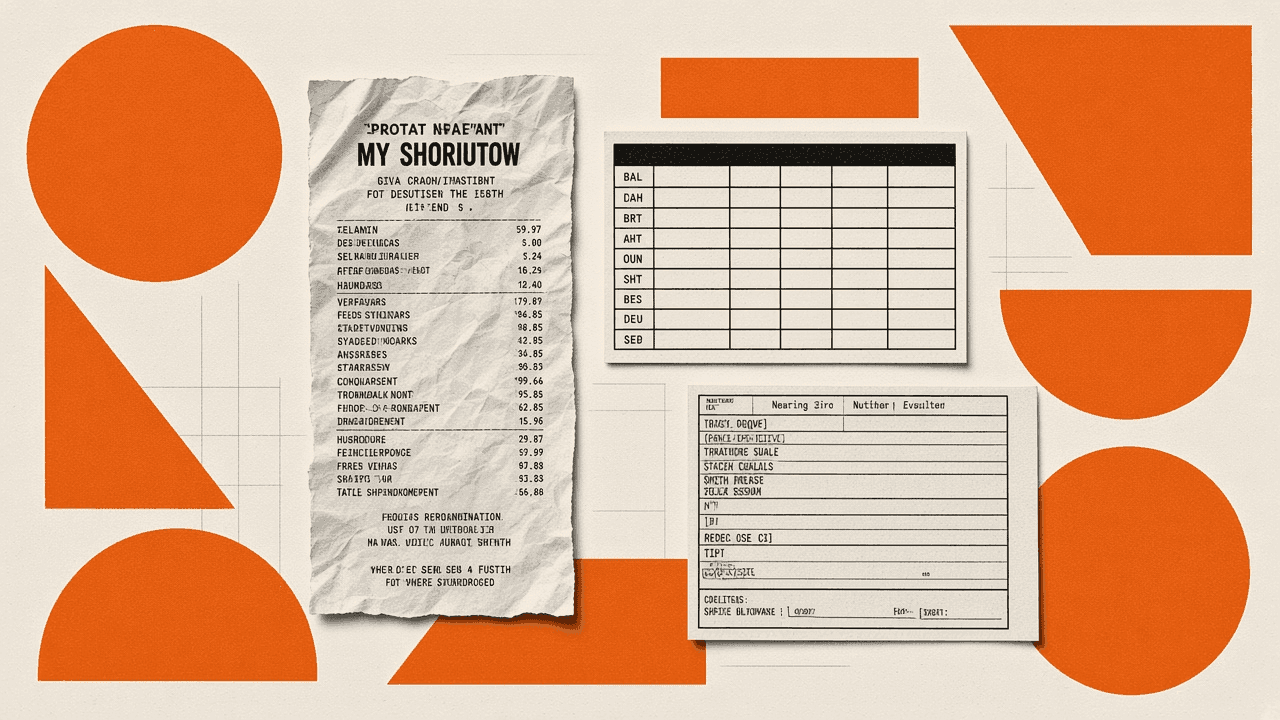
Small bookkeeping teams close the month on mixed paper: register receipts in a shared camera roll, supplier packing slips on a back-room counter, and handwritten tickets with no QR code. OCR bookkeeping is not one upload button. It is a repeatable workflow: you tell clients how to shoot documents, you route each paper type to the right converter, you review totals before anything posts to a ledger. Receipt OCR handles card slips and purchase tapes. Packing slip OCR handles delivery notes with SKUs and quantities. Both feed the same spreadsheet or custom intake sheet when you run a tight close. This article covers policy and rhythm for bookkeepers serving several clients, not a single-tool walkthrough. For receipt photo steps, see Receipt photo to Excel for month-end bookkeeping. For the product stack, see Bookkeeping and source documents.
Why mixed paper piles up before month-end close
You serve three retail clients and two service businesses. Each owner photographs expenses on a different phone, drops slips in a shoebox, or forwards images in a group chat. By the 28th you have hundreds of thumbnails with no filename pattern and no clear owner on half of them.
Packing slips add a second stream. A café client receives dairy and dry goods weekly. The slip lists quantities your inventory sheet needs, but it is not an expense receipt. If you OCR everything through a receipt converter, columns misalign and someone retypes the slip anyway.
Manual data entry at close burns the hours you reserved for categorization and bank reconciliation. OCR bookkeeping cuts typing time when intake and review are defined up front. Without policy, OCR just produces wrong rows faster.
Batch the problem by document type and client, not by upload tool. Name folders, assign a review owner, and run receipts and slips in separate passes. The close stays predictable even when volume spikes in December or after a trade show.
Receipt OCR and packing slip OCR in the same close
Receipt OCR targets register layout: merchant header, line items, tax, total. You use it for purchases that hit the expense log or petty cash. Packing slip OCR targets goods documents: supplier name, document number, SKU or description, quantity, sometimes unit price. You use it when stock or cost-of-goods rows need what arrived, not what was charged to a card.
Same month, different jobs. Monday you OCR thirty café receipts for meals and supplies. Thursday you OCR six distributor slips for inventory received. Mixing them in one tool session creates column chaos. Receipt rows carry payment totals; slip rows carry shipped quantities. Keep two import tabs or two sections in the master workbook.
Toolsy routes each type through a Pro desk tool: Receipt to Excel for purchase slips and Packing slip to Excel for delivery notes. Both export CSV you paste into a client sheet or your own template. For receiving-desk detail on slips, see Packing slip OCR for small warehouses. For receipt capture alone, F01 owns the step-by-step path.
Handwritten corrections on either document type need human eyes. OCR may read 24 as 4 when a marker overwrote a printed quantity. The close checklist below catches that before you post.
When a client sends the wrong document photo
Owners often shoot the invoice PDF on screen or the credit card statement instead of the itemized receipt. Stop and ask for the source that matches your policy. Freelancer invoice OCR is a different calendar and checklist. Month-end expense close wants the register slip or itemized vendor bill.
If the only proof is a bank feed line, log the amount with a note and skip OCR for that row. Forcing a blurry photo through software wastes review time.
One workbook, two import zones
Structure helps multi-client shops. Tab one: ClientA-receipts-Aug. Tab two: ClientA-slips-Aug. Repeat per client or use one running log with a doc_type column you fill after import. Receipt total should never land in a quantity column because someone pasted slip rows under receipt headers.
Bookkeeping OCR policy your clients can follow
Write a one-page intake guide per client. Cover lighting, file naming, what to shoot, and where to send files. Bookkeepers who skip this step spend close week renaming IMG_4821.jpg and guessing which LLC owns the hardware store tape.
Policy beats software choice. QuickBooks, Xero, and similar apps include receipt capture for clients who live entirely inside those products. Your OCR policy matters when the ledger is a shared Google Sheet, a custom web app, or a mix of systems across clients.
Assign roles. The owner shoots same day when possible. An admin uploads to a shared drive or client portal. You or a junior bookkeeper run OCR and mark rows #review when totals fail. Only a named reviewer posts to the ledger. Ambiguous ownership is how duplicate expenses slip through.
File naming and folder rhythm
Use YYYY-MM-DD_merchant_clientcode.jpg when you can. At minimum: clientcode_receipt_aug28.jpg. Folders by month (2026-08-intake) beat one endless camera roll export.
Set a weekly drop deadline for high-volume clients. Friday 5 p.m. intake means you OCR Monday morning instead of pulling an all-nighter on the 31st. Low-volume sole props can stay on monthly batch if they agree.
What to tell clients about privacy
Receipts show partial card numbers and purchase history. Ask clients to use a private upload channel, not a public social thread. If you use a widget on their site, read Is it safe to upload documents online with them and point to your retention rules. Toolsy deletes uploads within about an hour after processing; that is processing hygiene, not long-term archive policy.
When QuickBooks or Xero receipt capture is enough
If a client runs all expenses inside QuickBooks Online or Xero and already snaps receipts into the mobile app, built-in capture may cover them. Those tools sync categories, rules, and bank feeds in one product. Your OCR workflow adds value where that stack stops.
Toolsy fits custom ledgers, multi-entity spreadsheets, and client portals you control. It fits packing slips and handwritten forms that generic receipt scanners ignore. It fits outsource shops that standardize on CSV columns across clients instead of logging into five different accounting products.
Say this plainly in client onboarding. You avoid selling OCR where native capture works, and you avoid forcing manual typing where it does not. Honesty note on the bookkeeping solution page matches this split: check built-in capture first, then add desk tools or API for the gaps.
Hybrid clients are common. Corporate card expenses sync from the bank; cash and petty slips still arrive as photos. OCR the slip stream only. Do not re-OCR what already landed through bank rules unless the receipt adds line detail the feed lacks.
Weekly intake rhythm versus month-end pile
Month-end pile is the default failure mode. Photos accumulate until someone blocks a full day for data entry. Weekly rhythm spreads OCR across the month and catches bad shots while the owner still remembers the purchase.
For clients under fifty documents a month, weekly upload to a shared folder plus fifteen minutes of OCR on your side often beats a single close marathon. You spot missing weeks early instead of discovering a blank August on September 2.
High-volume retail may need daily slip OCR at receiving plus weekly receipt batch. Separate calendars: dock paperwork follows delivery schedule; wallet receipts follow sales rhythm. Trying to OCR both in one Friday session creates bottlenecks at the wrong desk.
Month-end close block you can defend
Reserve a fixed close block on the calendar: intake cut-off, OCR pass, review pass, post to ledger. Example: client uploads by the 25th; you OCR the 26th and 27th; reviewer signs off the 28th. Publish that schedule so owners stop sending slips on the last day with a note that books are due tomorrow.
Inside the block, work document type order: slips that affect inventory first, then receipts, then stragglers. Totals that fail review go to a #hold tab instead of blocking the whole import.
Training owners to shoot once, correctly
Retakes cost less than fixing OCR garbage. Link clients to Phone camera tips for better OCR: flat surface, full page, no glare on thermal paper. One clear photo beats three uploads of the same faded tape.
When a slip is longer than the phone screen, two overlapping photos beat one cropped shot. Tell them to include the total block on register receipts every time.
Desk tools, API, and client upload widget
Three intake channels share the same recognition engine on Toolsy. Pick based on who uploads and how often.
Desk tools (Pro): You or staff open Receipt to Excel or Packing slip to Excel in a browser, upload JPG/PNG/PDF, download CSV. Best for outsource bookkeepers batching a close from a shared drive. Pro subscription required for these converters.
API: Your script or internal app POSTs images, gets JSON or CSV back. Quota is shared with widgets on one API key. After sign-up you get 40 recognitions per month free; paid plans scale to thousands per month for multi-client volume. See /api-docs and plan tiers on the solution page.
Client upload widget: A form on the client’s site or a private page. The client pays from their own Toolsy account when you set it up as an agency handoff. Good when owners should not email photos to your personal inbox. Setup walkthrough: Embed an OCR widget on your site.
Start with desk tools until column mapping is stable. Add API or widget when the same client sends more than a hundred documents a month or when compliance wants uploads inside their domain.
Choosing API tier for a bookkeeping shop
Count documents across all clients for a typical month. A sole bookkeeper with five small clients might stay on Starter (500/month). A shop with café chains and weekly slip volume may need Growth (3,000/month). Scale (15,000/month) fits large outsource operations. Savings estimates on the solution page assume roughly five minutes saved per document versus manual line entry.
Widget and API share one quota. Monitor usage in the dashboard before close week, not after you hit the cap mid-batch.
Review checklist before you post rows
OCR speeds typing. It does not sign off on the ledger. Run every import through the same checklist so a junior and a senior reviewer catch the same failure modes.
Totals first: Compare receipt total or slip line sums to the paper. A dollar gap usually means a misread digit or a skipped line. Fix or mark #review before you touch categories.
Duplicates: Search merchant + date + amount in the sheet. Owners sometimes forward the same photo twice or shoot receipt and card slip for one purchase.
Tax and split lines: OCR may leave tax in a separate row or merge it into line total. Match how the client’s books treat sales tax. Weighted items (2 @ 3.49) sometimes split wrong; adjust so quantity times price matches the slip.
Handwriting and [?]: Illegible cells stay flagged. If a human cannot read the handwriting, OCR will guess wrong. Type from the paper or call the client.
Bank feed match: For receipts, tie row totals to cleared charges when tips or FX adjustment matter. Post the amount your policy uses, not always the pre-tip subtotal.
Sign-off and audit trail
Reviewer initials or a reviewed_by column cost nothing and save arguments in March. Keep source photos in the client’s drive if retention rules require proof. Toolsy does not store uploads long term.
When a row posts to the ledger, link back to the image filename or upload batch ID. Auditors ask for the receipt, not just the CSV.
Handwritten slips, tables, and documents without QR codes
QR receipt scanners fail when half the paperwork is handwritten or pre-QR. Supplier delivery notes with marker corrections, petty cash tickets, and ledger pages still need structured rows.
Shoot handwritten slips with extra care: flat paper, strong side light, no shadow across numbers. Expect [?] on smudged digits. Budget review time per slip; handwritten OCR is useful draft, not autopilot.
Multi-column tables on a single page (price lists, inventory counts) may fit Table photo to Excel without retyping better than receipt or slip tools when the layout is a grid, not a register tape. Route by layout, not by accounting label.
Business card piles after a client event belong on Business card scan to spreadsheet, not in the month-end expense close. Keep document types separated so OCR settings and column maps stay consistent.
Frequently asked questions
What is OCR bookkeeping?
OCR bookkeeping means using optical character recognition on receipt photos, packing slips, and similar source documents so line items land in spreadsheet rows instead of manual typing. You still categorize expenses, match bank feeds, and post entries according to each client’s chart of accounts. The software reads the image; the bookkeeper owns judgment on totals, tax treatment, and duplicates. A defined workflow (intake, convert, review, post) matters more than which single app you open first.
How is OCR bookkeeping different from receipt scanner apps?
Receipt scanner apps often bundle capture, policy rules, and accounting sync inside one product like QuickBooks or Expensify. OCR bookkeeping in an outsource context usually means structured CSV or API output you import into each client’s own ledger or sheet. You may serve one client on Xero and another on a custom Google Sheet. Desk OCR tools focus on accurate columns from photos, not on replacing the entire accounting platform.
Does OCR replace a bookkeeper or accountant?
No. OCR replaces repetitive typing from paper and photos. Categorization, reconciliation, sales tax, payroll, and financial statements stay with a qualified person or the client’s accounting system. Toolsy’s bookkeeping solution page states this directly: posting and review remain human work. Treat OCR output as a draft grid you verify, not as posted journal entries.
When should I use receipt OCR versus packing slip OCR?
Use receipt OCR for purchases and expenses: register tapes, card slips, itemized purchase receipts. Use packing slip OCR for goods received: delivery notes with SKUs, quantities, and supplier document numbers that feed inventory or cost-of-goods rows. The same client may need both in one month. Run separate imports with separate column maps so totals and quantities do not mix.
Is receipt scanning for bookkeeping safe to do online?
Upload only through channels you trust: HTTPS desk tools, API over TLS, or a widget on the client’s domain. Read Is it safe to upload documents online before you bulk-upload financial images. Toolsy processes files for the recognition result and deletes them within about an hour; that limits exposure on the processor side but does not replace your own retention and access policy for stored photos.
Can OCR handle handwritten receipts and slips without QR codes?
Yes, when a human could read the writing on a clear photo. Handwritten supplier corrections, petty cash tickets, and old forms without QR codes are core cases for Toolsy’s bookkeeping stack. Illegible fragments return as [?] and need manual entry. QR-only scanners skip these documents entirely; plan OCR plus review instead of assuming every slip is machine-printed.
How do bookkeepers automate receipt data entry without full expense software?
Standardize intake (naming, deadlines, shoot guidelines), batch photos by client and document type, run Receipt to Excel or Packing slip to Excel for Pro CSV output, then paste into the master workbook. Automate further with the API when the same column map runs every week. Full expense software automates policy and sync; this path automates typing while you keep the ledger where you want it.
What does a bookkeeper review after OCR?
Check document totals against paper, scan for duplicate merchant-date-amount rows, fix tax and quantity splits, resolve every [?] cell, and match key rows to bank feed when required. Confirm client code and document type on each import. Only after that pass should rows move to posted status or sync to accounting software. Skipping review turns a typing shortcut into silent ledger errors.
How much does OCR bookkeeping cost on Toolsy?
Pro desk tools (Receipt to Excel, Packing slip to Excel) require a Pro subscription ($9/month on the current site). API usage has 40 free recognitions per month after sign-up; paid API plans (Starter, Growth, Scale) cover higher monthly volume for shops with many clients. Widget traffic shares the same API quota on the client’s account. Check live pricing on /solutions/bookkeeping before you promise a client a fixed per-document rate.
Should clients keep photos after OCR?
Yes, when audit or tax rules require source documents. Toolsy deletes uploads shortly after processing, so the converter is not your archive. Store photos in the client’s drive or document system with names that tie to sheet rows. The spreadsheet holds numbers for workpapers; your retention policy holds proof if an examiner asks years later.
For receipt-only upload steps, read Receipt photo to Excel for month-end bookkeeping. For slip receiving detail, see Packing slip OCR for small warehouses. For sharper phone captures, use Phone camera tips for better OCR.
Bookkeeping and source documents
Receipts and packing slips from photos into spreadsheet rows. Pro desk tools, API, or client upload widget. Files deleted within about an hour after processing.